World Emoji Day

World Emoji Day
July 17th is World Emoji Day! These days we use emojis to convey meaning over text but how have we done that throughout human history? Here are some book recommendations to answer that question!
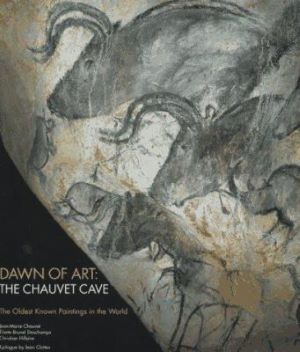
In December of 1994, three speleologists (scientists who study caves) discovered this cave and the paintings contained within. Generally, the animals drawn during this time period (Aurignacian Era, occurring between 32,000 to 30,000 years ago) were animals that were hunted. This series of cave paintings are so notable because the range of animals includes more than just the typically hunted ones, for example: rhinoceros, lions and bears. Though cave art is not technically classified as a writing system, it could be considered a form of communication. Just looking at the photographs of these cave paintings is such a unique emotional experience, thinking back to the humans who drew them to tell us and each other what they saw.
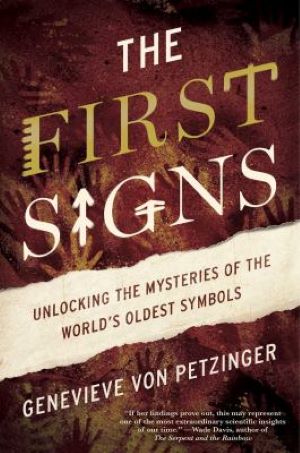
The First Signs: Unlocking the mysteries of the world’s oldest symbols
In her last year of her undergraduate, archaeologist Genevieve von Petzinger was taking a class on Paleolithic (Stone Age) art. She became intrigued by reoccurring geometric symbols found at many of these cave sites. Her first project focused on symbols found in France during the Upper Paleolithic Era (occurring 10,000 to 40,000 years ago) but left her with more questions than answers. In this book, von Petzinger explores what these geometric signs say about the movement of people and ideas during this time period, and whether they can be considered a form of graphic communication.
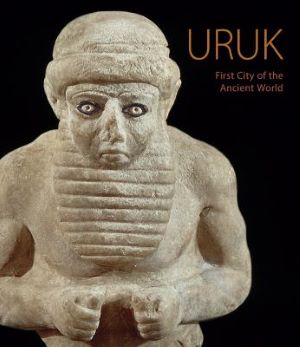
This book offers the most up-to-date assessment of archaeological evidence gathered at the site of Uruk (present day Iraq). From the artifacts found at this site, we know that earliest known form of writing, proto-cuneiform, was developed here over 5000 years ago. It was also from here that the tablets containing the Epic of Gilgamesh (one of the oldest masterpieces in world literature) were discovered. In Uruk: First city of the world, you will get a glimpse into life, culture and art in the first great city of the ancient world.

This book, written by Edward Chiera, discusses what we refer to now as the Nuzi Texts. These are a series of cuneiform tablets written in the Akkadian language and discovered between 1896 and 1925. Because so many clay tablets were preserved, we now have a lot of documentation covering many phases of knowledge during the Late Bronze Age. Through these tablets, we can follow changes in religious beliefs, economic conditions, and customs in daily life.
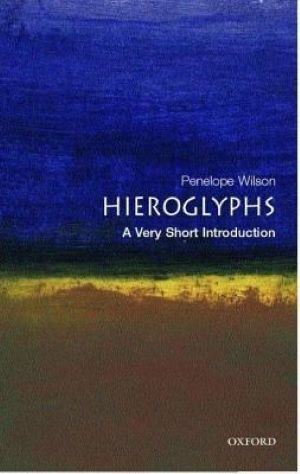
Hieroglyphs: A very short introduction
In Hieroglyphs: A very short introduction, author Penelope Wilson takes the reader through the cultural significance of hieroglyphics in Ancient Egyptian society. Wilson highlights the differences between formal hieroglyphic script and hieratic script. The formal hieroglyphic script tends to remain an archaic form of the language, existing in sacred spaces such as temples or tombs, whereas the hieratic script is a shorthand developed to be used in daily life and often shows much more variation as the language itself reached new and different stages.
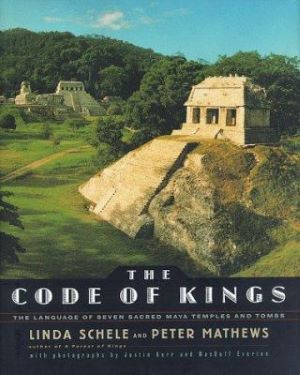
Authors Linda Schele and Peter Mathews were pivotal in discovering the Maya use of hieroglyphics to cover their public spaces with the history and belief systems of their people. The Code of Kings serves as a guided tour through the lost civilization of the Maya, focusing on seven buildings renowned for their beauty and sacred power. The seven sites contain all the elements the ancient Maya considered necessary to charge a building with religious and political meaning. They represent the range of the Maya experience.
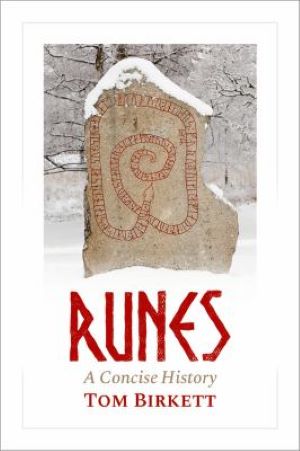
This is an accessible and illuminating introduction to the history of the runic script, a writing system in use in the medieval North from the Roman Iron Age until the Reformation and beyond. Runes were the only writing system known to Germanic tribes, including those who migrated to England, and they provide a first-hand account of huge social change in the medieval North, including the Viking expansion in Europe and the adoption of Christianity.
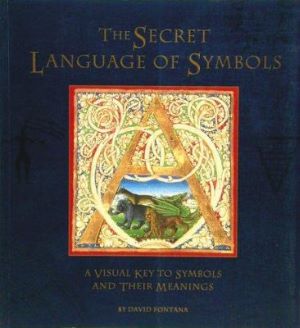
The Secret Languages of Symbols
The Secret Language of Symbols traces the origins and evolution of a wide range of symbols and symbol systems. Moving from the gods and goddesses of antiquity to the symbols present in the myths and rituals of modern society, hundreds of symbols and symbol systems are identified, illustrated, and interpreted. Many express our encounters with the natural and animal worlds. Others speak to our human condition. Author David Fontana draws upon his broad knowledge of psychology, spirituality, anthropology, and history to deepen our understanding of the profound messages that can be conveyed by these symbols.

Emoji and Social Media Paralanguage
Including a wide range of fascinating examples taken from social media, this unique book provides a comprehensive framework for analyzing how we use emoji to convey meaning, and how emoji function in social bonding. It is essential reading for anyone wishing to investigate the role of emoji in digital communication.